What Are Acoustic Aluminium Louvres?
Acoustic aluminium louvres reduce the transmission of noise while allowing air to pass through an opening. They are installed in generator rooms, plant rooms, mechanical spaces and commercial buildings where ventilation is required but equipment noise needs to be controlled.
The system usually consists of aluminium frames and specially shaped blades. Inside the blades, sound-absorbing material is incorporated to reduce noise transmission through the ventilation opening. The performance depends on the complete panel construction rather than the aluminium blades alone. Blade depth, internal passage geometry, acoustic material and airflow resistance all influence the final specification.
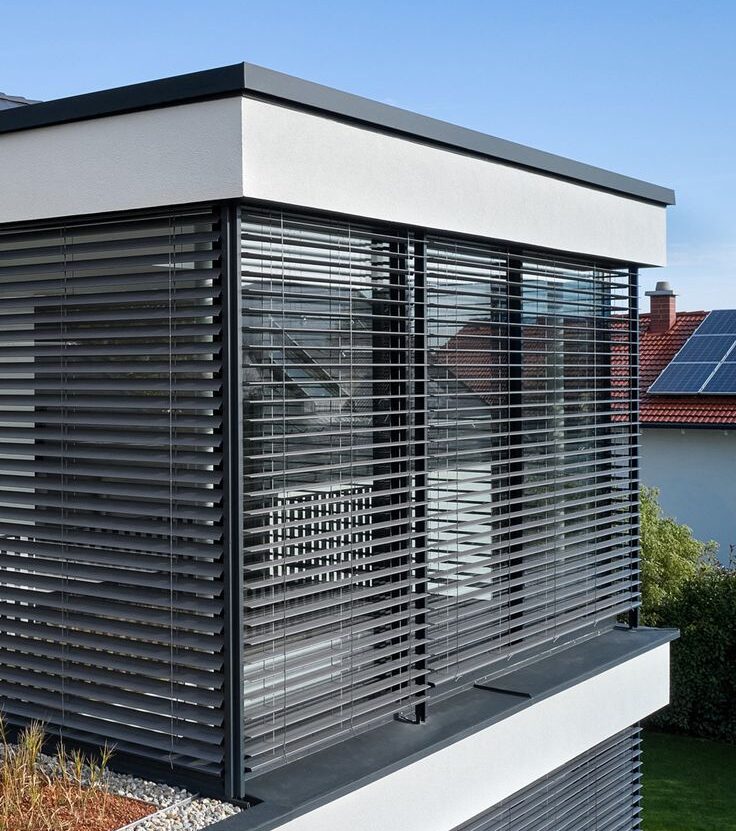
For general ventilation applications, you can also read our article on Aluminium Ventilation Louvres in Kenya.
Where Are Acoustic Aluminium Louvres Used?
Generator rooms: They help reduce noise escaping through ventilation openings while allowing the generator to receive the air required for operation.
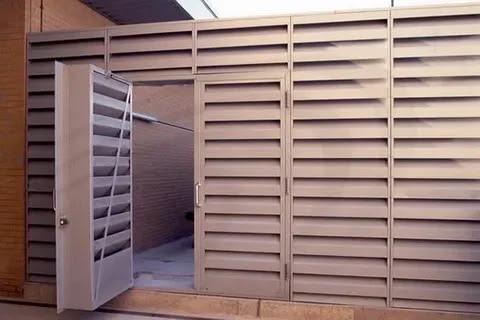
Plant rooms: Mechanical equipment such as pumps, compressors and ventilation systems may produce noise that needs to be controlled.
Commercial buildings: Acoustic louvres can be used around mechanical service areas in hotels, offices, hospitals and shopping centres.
Industrial facilities: They can form part of ventilation openings and acoustic screening arrangements around machinery.
Acoustic Aluminium Louvre Prices in Kenya
There is no single reliable price that applies to every acoustic louvre configuration. A shallow panel for a small plant-room opening will have different material and performance requirements from a deep acoustic louvre bank serving a large generator installation.
Consider Contacting AluminiumPro Kenya to help plan on the project
Main Factors That Determine Acoustic Louvre Prices
1. Blade Depth
Blade depth is one of the most important factors in acoustic louvre design. Deeper blades provide more internal space for the acoustic passage and infill material.
Commercial acoustic louvre products are available in different depths, with examples in the market ranging from approximately 150 mm to over 500 mm. These are examples of product configurations, not universal sizes or a recommendation for every project.
2. Acoustic Infill Material
Acoustic infill is the material placed within the louvre blades to absorb sound energy. Mineral wool is commonly used in specialist acoustic louvre construction.
The infill should be appropriate for the intended environment. Important considerations include:
- Density and thickness of the acoustic material.
- Resistance to moisture and environmental exposure.
- Non-shedding or suitably protected construction.
- Fire-performance requirements.
- Retention within the aluminium blade.
- Protection against damage during cleaning and maintenance.
3. Aluminium Thickness
The aluminium sheet or profile thickness affects the strength and durability of the louvre assembly. It must be suitable for the panel dimensions, blade geometry, support spacing and installation environment.
Large acoustic panels may require stronger frames and additional intermediate supports. The frame must also accommodate the weight of the acoustic infill and any protective facings.
When requesting a quotation, ask for the aluminium thickness and profile specification rather than comparing prices based only on the external panel dimensions.
4. Acoustic Performance Requirement
Acoustic performance is frequency-dependent. A louvre may perform differently at low, middle and high frequencies. This matters for generator installations because engine and exhaust noise can contain significant low-frequency components.
Ask the supplier for relevant test data, including the test standard, frequency range and reported acoustic rating. Avoid relying on general descriptions such as “soundproof louvre” without supporting performance information.
5. Free Area and Airflow Resistance
Acoustic louvres have internal passages and sound-absorbing components that can restrict airflow. Their free area is therefore an important design consideration.
The required airflow should be established before selecting the panel. A system with a high acoustic rating may create excessive resistance if it is not sized correctly for the ventilation requirement.
For generator and plant-room applications, the ventilation designer should confirm the required air volume, pressure drop and opening arrangement.
6. Finish and Protective Components
Powder-coated aluminium are selected to match the building façade or surrounding equipment enclosure. Additional items may include bird guards, insect mesh, perimeter flashings, support frames and weather protection components.
Acoustic Louvres vs Ordinary Aluminium Ventilation Louvres
Ordinary ventilation louvres are primarily intended to allow air through an opening while providing some screening against rain, debris or direct visibility.
Acoustic louvres have a more specialised internal construction. They incorporate sound-absorbing material and carefully designed airflow passages to reduce noise transmission.
The two systems should not be treated as interchangeable. A standard ventilation louvre may provide adequate airflow but will not necessarily deliver the noise reduction required around a generator or mechanical plant.
For a comparison of general ventilation products, see Aluminium Ventilation Louvres in Kenya. You can also explore Aluminium Sun Louvres in Kenya for external shading applications.
How Acoustic Aluminium Louvres Are Installed
1. Assess the opening: Measure the proposed louvre opening and establish the wall construction, available depth and installation access.
2. Confirm the acoustic requirement: Identify the noise sources and the required reduction. Where necessary, obtain acoustic advice or a project noise assessment.
3. Establish airflow requirements: Confirm the required airflow, free area and allowable pressure drop.
4. Select the louvre construction: Agree on blade depth, aluminium thickness, acoustic infill, protective facing and finish.
5. Fabricate the panels.
6. Install the supporting frame: Check that the wall or supporting structure can carry the panel weight and that fixing points are suitable.
7. Fit and seal the louvres: Install the panels, secure the fixings and complete the perimeter details without obstructing the intended airflow path.
8. Inspect the completed installation: Check panel alignment, fixings, acoustic infill protection, airflow openings and access for future maintenance.
What to Include When Requesting an Acoustic Louvre Quotation
To avoid receiving quotations based on different assumptions, provide the following information:
- Opening width and height.
- Required panel depth or available installation depth.
- Intended application, such as a generator room or plant room.
- Generator or equipment details, where applicable.
- Required airflow or ventilation design information.
- Target noise reduction and any available acoustic report.
- Preferred aluminium finish and colour.
- Whether bird mesh, insect mesh or protective screening is required.
- Site location, access conditions and installation height.
Related Aluminium Solutions
Acoustic louvres are often part of a wider aluminium and building-envelope installation. For general ventilation, see our Aluminium Ventilation Louvres article.
For external shading and façade coordination, read Aluminium Sun Louvres, Modern Aluminium Window Designs and Why Choose Aluminium Frames for Buildings.
You may also find our guides on How Much Aluminium Fabrication Costs in Kenya, Aluminium Louvre Windows Prices in Kenya, and Aluminium Windows and Doors Prices in Kenya useful when comparing materials and finishes.
For wider building projects, explore our Aluminium Structures and Aluminium Windows services.
Areas We Serve
AluminiumPro Kenya provides aluminium windows and doors, glass partitions, aluminium shopfronts, roofing solutions and customised aluminium and glass installations across Nairobi, Kenya and selected locations throughout East Africa.
Within Nairobi and its surrounding areas, we serve clients in Westlands, Lavington, Karen, Kilimani, Kileleshwa, Runda, Muthaiga, Gigiri, Loresho, Lang’ata, Spring Valley, Lower Kabete, Ruaka, Utawala and Ruiru.
We also undertake projects in major towns and cities across Kenya, including Mombasa, Kisumu, Nakuru, Eldoret, Naivasha, Meru, Thika, Machakos and other surrounding areas.
Whether you are planning acoustic louvres, aluminium ventilation panels, façade improvements or customised aluminium installations, AluminiumPro Kenya is ready to discuss your project requirements.
Beyond these locations, we welcome enquiries for suitable projects throughout Kenya and East Africa. Contact our team to confirm service availability, arrange a project assessment and request a quotation.
Request a Quote for Acoustic Aluminium Louvres
Are you planning acoustic louvres for a generator room, plant room, commercial building or industrial facility?
Share the opening dimensions, required blade depth, acoustic performance target and available ventilation information with AluminiumPro Kenya. This will help establish the appropriate aluminium panel construction and the information required for a project-specific quotation.
Call or WhatsApp:
- 0717 044 443
- 0739 255 050
- 0725 021 709
AluminiumPro Kenya – Custom Aluminium Solutions for Modern Buildings.